Dianella brevipedunculata R.J.F.Hend. APNI* Description: Plant tufted, solitary, to 0.5 m high. Stems less than 8 cm long, more or less touching. Roots fleshy-fibrous.
Leaves 0.5–1 m long; sheath conduplicate, more or less wholly occluded distally; lamina 1–2 cm wide.
Inflorescence shorter than foliage, irregular in outline, uninterrupted; cymules expanded, 1–6-flowered. Perianth purplish blue.
Berry 5–12 mm long; seeds 2.5–3.5 mm long; seedcoat black, shiny.
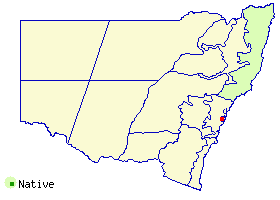
Distribution and occurrence: Extreme NE NSW coast (Tweed Shire); also SE Queensland. Open forest.
NSW subdivisions: NC
Other Australian states: Qld
Text by Karen Wilson, based on R. Henderson (1987) Flora of Australia vol. 45
Taxon concept: R. Henderson (1987) Flora of Australia vol. 45
APNI* Provides a link to the Australian Plant Name Index (hosted by the Australian National Botanic Gardens) for comprehensive bibliographic data
***The AVH map option provides a detailed interactive Australia wide distribution map drawn from collections held by all major Australian herbaria participating in the Australian Virtual Herbarium project.
|